Flexibility can often be improved with regular, gentle practice. Stretching is the best known method, and research suggests that strength training through a full range of motion may improve range of motion about as much as stretching. Consistency over weeks tends to matter more than long or intense sessions, and a stretch should feel like mild tension, not sharp pain.
What flexibility is and what research says
Flexibility describes how far your joints can move through their range of motion. It depends on muscles, tendons, joints and how comfortable your nervous system is with a stretch. Flexibility differs between people and between parts of the body, and it can change with activity and age.
The sections below explain why flexibility matters for everyday life, what research has found about how stretching improves it and how other types of exercise may also contribute. Understanding the evidence can help you set realistic expectations and choose approaches that suit you.
Why flexibility matters in everyday life
Good flexibility can make daily movements feel easier and more comfortable. Activities such as gardening, cleaning, playing with children or carrying shopping all involve bending, reaching and twisting. When muscles and joints feel stiff, these movements may become harder or less pleasant.
Flexibility is one part of overall fitness, alongside strength, endurance and balance. It does not need to be extreme to be useful. For most people, the aim is to move comfortably through everyday tasks rather than to achieve advanced poses. The table gives examples.
| Everyday movement | Areas involved |
|---|---|
| Bending to pick something up | Hips, hamstrings, lower back |
| Reaching overhead | Shoulders, upper back |
| Turning to look behind you | Neck, upper back |
| Getting up from the floor | Hips, knees, ankles |
| Sitting comfortably for long periods | Hips, back |
Noticing which movements feel stiff for you can help you decide where to focus. Many people find that the hips, hamstrings, shoulders and upper back benefit from regular attention, especially if they sit a lot. Starting with one or two areas can make a routine easier to keep.
What research says about stretching and range of motion
Research consistently finds that stretching can improve flexibility. A review published in 2018 found that the total time spent stretching each week appeared more important than the time spent in a single session, with benefits seen when stretches were applied for at least 5 minutes per week [1]. The authors also linked more frequent stretching with greater improvements [1].
A 2025 meta-analysis of static stretching in adults found a moderate effect on flexibility after a single session and a large effect after regular stretching over time [2]. The analysis suggested that improvements were greatest at around 4 minutes per muscle group per session and 10 minutes per muscle group per week [2].
| Finding | What it suggests | Source |
|---|---|---|
| Weekly stretching time linked with gains | Consistency matters more than long sessions | Review of stretching studies [1] |
| Large effect of regular static stretching | Benefits build over weeks | 2025 meta-analysis [2] |
| Gains greatest around 10 minutes per muscle per week | Moderate amounts may be enough | 2025 meta-analysis [2] |
| Single sessions give small, short-term gains | Stretching before activity may help briefly | Meta-analysis of acute stretching [3] |
These findings describe average effects in studies, and individual results vary. They suggest that short, regular stretching sessions spread through the week may be a practical approach for many people. Patience is important, as improvements usually build gradually over several weeks.
Strength training can also improve flexibility
Stretching is not the only way to improve range of motion. A meta-analysis comparing strength training and stretching found that both improved range of motion, with no clear difference between them in the studies included [4]. Exercises that move joints through a full range, such as squats and lunges, may contribute to flexibility while building strength.
This can be useful for people who find stretching boring or have limited time. Combining strength training with some stretching or mobility work may offer benefits for both strength and flexibility. Activities such as yoga and Pilates also combine stretching with strength and control.
- Strength training through a full range of motion.
- Yoga, which combines stretching, strength and balance.
- Pilates, which focuses on core strength and controlled movement.
- Mobility exercises that move joints gently through their range.
The [Yoga](https://ultiself.com/habits/yoga) and [Pilates](https://ultiself.com/habits/pilates) habits offer structured ways to combine flexibility and strength. Choosing an activity you enjoy can make it easier to practice regularly. Classes, online videos or apps can all be good starting points. Beginner-level sessions are usually the safest place to start if you are new to these activities.
How to stretch safely and effectively
Stretching is simple, but a few principles can make it safer and more effective. These include warming up, choosing the right type of stretch for the situation and stretching to mild tension rather than pain. Paying attention to how your body feels is important throughout.
Each practice below connects with a habit you can add to your routine. The table shows how each part of a stretching routine links to a related habit, so that flexibility work becomes a regular part of your week.
| Practice | What it changes | Habit to practice |
|---|---|---|
| Regular stretching | Better range of motion over time | [Stretching](https://ultiself.com/habits/stretching) |
| Yoga practice | Flexibility, strength and balance | [Yoga](https://ultiself.com/habits/yoga) |
| Slow, longer holds | Deep relaxation and gentle stretch | [Yin yoga](https://ultiself.com/habits/yin-yoga) |
| Self-massage | Muscle comfort and warm-up | [Use foam roller](https://ultiself.com/habits/use-foam-roller) |
| Posture awareness | Less stiffness from sitting | [Work on posture](https://ultiself.com/habits/work-on-posture) |
Know the main types of stretching
There are several types of stretching, each suited to different situations. Static stretching involves holding a position for a period of time. Dynamic stretching involves moving parts of the body through their range in a controlled way, such as leg swings or arm circles.
Dynamic stretches are often used as part of a warm-up before exercise, while static stretches are commonly done after activity or as a separate session. A meta-analysis found that a single bout of stretching produced small short-term improvements in range of motion across different techniques [3]. The table compares common types.
| Type | What it involves | When it may suit |
|---|---|---|
| Static stretching | Holding a stretch in one position | After exercise or as a separate session |
| Dynamic stretching | Controlled movement through range | As part of a warm-up |
| Yoga | Flowing or held poses with breathing | As a regular practice |
| Mobility exercises | Gentle joint movements | Daily, including desk breaks |
The [Stretching](https://ultiself.com/habits/stretching) habit helps you keep regular sessions in your routine. Trying different types can help you find what feels best for your body. Over time, you may notice which stretches feel most helpful and build your routine around them. Keeping notes on how your body feels can also guide these choices.
Stretch to mild tension, not pain
Stretching should feel like a gentle pull in the muscle, not sharp or intense pain. Pushing too far can strain muscles or joints. A useful guide is to stretch to the point of mild tension, hold it while breathing slowly and ease off if it becomes uncomfortable.
Warming up before stretching, for example with a few minutes of walking, may make stretches feel more comfortable. Moving slowly into and out of each stretch, rather than bouncing, can also reduce the risk of strain. The steps below describe a simple approach.
- Warm up with a few minutes of light movement.
- Move slowly into the stretch until you feel mild tension.
- Hold the position while breathing slowly.
- Ease out of the stretch gently.
- Repeat on the other side if relevant.
If a stretch causes sharp pain, numbness or tingling, stop and seek advice from a doctor or physiotherapist. People recovering from injury or surgery should follow their own professional guidance. Stretching should leave you feeling looser and more comfortable, not sore.
A simple full-body stretching routine
A short routine covering the main muscle groups can be done at home without equipment. Spending a few minutes on each area, a few times a week, may help improve flexibility over time. The table shows an example routine for beginners.
This routine is only an example, and you can adapt it to your needs. Some people prefer to focus on areas that feel stiff, while others like to cover the whole body. Doing it after a walk or workout, when muscles are warm, may feel more comfortable.
| Area | Example stretch | Notes |
|---|---|---|
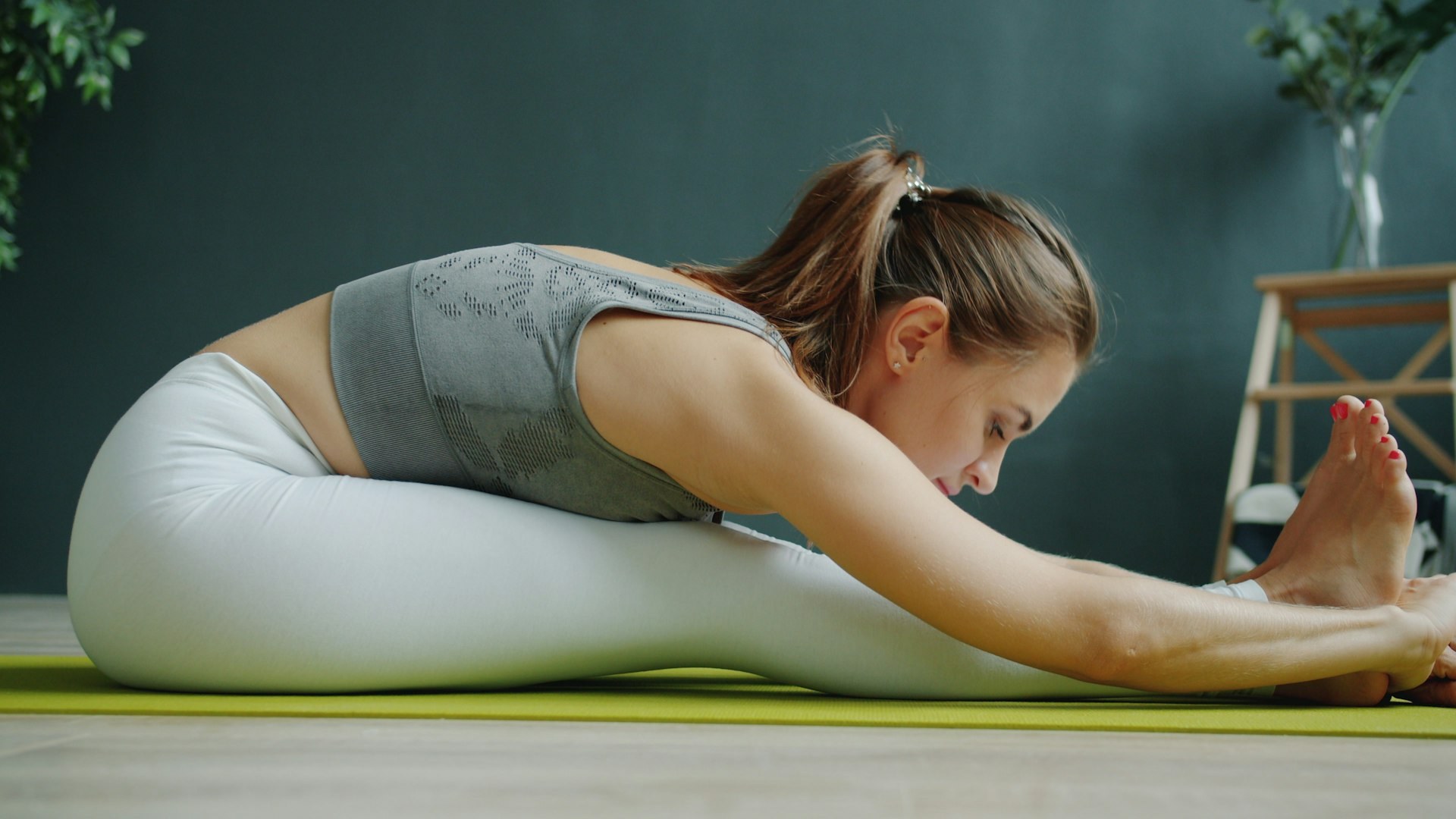
| Hamstrings | Seated forward reach | Keep the back long |
| Hips | Kneeling hip flexor stretch | Use a cushion under the knee |
| Chest and shoulders | Doorway chest stretch | Keep shoulders relaxed |
| Upper back | Cat and cow movement | Move slowly with breathing |
| Calves | Wall calf stretch | Keep the heel on the floor |
| Neck | Gentle side neck stretch | Avoid pulling on the head |
The [Use foam roller](https://ultiself.com/habits/use-foam-roller) habit can be a gentle addition before or after stretching. Keeping the routine short makes it easier to repeat regularly. A routine of 10 to 15 minutes, a few times a week, can be a realistic starting point for many people. You can extend it gradually as it becomes familiar.
How to build flexibility into your routine
Flexibility improves gradually, so regular practice tends to matter more than occasional long sessions. Finding small moments in your day for stretching or mobility can make it easier to keep going. Linking flexibility work to existing routines may help it become a habit.
The sections below cover fitting stretching into busy days, making it a lasting habit and knowing when to seek professional advice. Together with the practices above, they can help you move more comfortably over time. Small, regular steps tend to be easier to maintain than occasional long sessions.
Fit stretching into busy days
Stretching does not need a long, dedicated session. Short stretches during work breaks, after a walk or while watching television can add up over the week. Research suggests that total weekly time may matter more than the length of each session [1].
Choosing a few regular moments can make stretching feel less like an extra task. For example, you might stretch your calves while waiting for the kettle or do a hip stretch after getting home. The table gives ideas.
| Moment | Possible stretch |
|---|---|
| Morning | Gentle full-body stretch after waking |
| Work break | Neck, shoulder and chest stretches |
| After a walk | Calf and hamstring stretches |
| Evening | A short yoga or yin yoga session |
| Watching TV | Hip and hamstring stretches on the floor |
The [Work on posture](https://ultiself.com/habits/work-on-posture) habit can remind you to move during long periods of sitting. You can track these habits in the Ultiself app, where each one sits in your daily routine. Over a few weeks, these small moments may add up to meaningful practice time.
Make flexibility a lasting habit
Like other routines, stretching may become easier with repetition. In one study, new daily habits took a median of 66 days to feel automatic, with large differences between people [5]. Keeping sessions short and linking them to a fixed moment can help them stick.
If-then plans can support this process. A meta-analysis of 94 tests found that such plans had a medium to large effect on reaching goals [6]. For flexibility, a plan might be: if I finish my evening walk, I do five minutes of stretching before going inside.
| Situation | If-then plan |
|---|---|
| After waking | If I get out of bed, I do a two-minute stretch |
| Working at a desk | If I have sat for an hour, I stretch my neck and shoulders |
| After exercise | If I finish a workout, I stretch for five minutes |
| Evening | If it is after dinner, I do a short yoga session |
| Weekend | If it is Sunday, I do a longer stretching routine |
Our guide on [how long it takes to build a habit](https://ultiself.com/blog/how-long-does-it-take-to-build-a-habit) explains this process in more detail. Starting small and building gradually can make flexibility work more sustainable. Celebrating small improvements, such as reaching a little further, can also help you stay motivated.
When to seek professional advice
Stretching is safe for most people, but some situations call for professional guidance. A doctor or physiotherapist can assess stiffness or pain, check for underlying problems and suggest exercises that suit your body. This is especially important if you have an injury or a health condition.
Some people have very flexible joints, a condition called hypermobility, and may need to focus more on strength and control than on stretching further. The list shows situations in which professional advice is a sensible step. A professional can help you find the right balance for your body.
- You have pain, swelling or stiffness that does not improve.
- You are recovering from an injury or surgery.
- You have a joint condition such as arthritis or hypermobility.
- Stretching causes sharp pain, numbness or tingling.
- You are pregnant and unsure which stretches are suitable.
The habits in this guide can sit alongside professional advice, and a physiotherapist can help you choose which ones fit your situation. They are not a substitute for medical care when pain or a health condition is involved.
Common questions
How can I improve my flexibility?
Regular stretching spread through the week, yoga, Pilates and strength training through a full range of motion may all help. Research suggests consistency over weeks matters more than long sessions.
How long does it take to become more flexible?
This varies between people and depends on how often you stretch. Studies have found larger improvements with regular stretching over weeks than after single sessions.
Should I stretch before or after exercise?
Many people use dynamic stretches as part of a warm-up and static stretches after exercise or as a separate session. Both can be part of a balanced routine.
Can strength training improve flexibility?
A meta-analysis found that strength training and stretching both improved range of motion, with no clear difference between them in the studies included.
Is stretching supposed to hurt?
Stretching should feel like mild tension, not pain. If a stretch causes sharp pain, numbness or tingling, stop and seek advice from a doctor or physiotherapist.
Sources
- Thomas E, Bianco A, Paoli A, Palma A. The relation between stretching typology and stretching duration: the effects on range of motion. International Journal of Sports Medicine, 2018.
- Ingram LA, Tomkinson GR, d'Unienville NMA, et al. Optimising the dose of static stretching to improve flexibility: a systematic review, meta-analysis and multivariate meta-regression. Sports Medicine, 2025.
- Behm DG, et al. Acute effects of various stretching techniques on range of motion: a systematic review with meta-analysis. Sports Medicine Open, 2023.
- Afonso J, Ramirez-Campillo R, Moscão J, et al. Strength training versus stretching for improving range of motion: a systematic review and meta-analysis. Healthcare, 2021.
- Lally P, van Jaarsveld CHM, Potts HWW, Wardle J. How are habits formed: modelling habit formation in the real world. European Journal of Social Psychology, 2010.
- Gollwitzer PM, Sheeran P. Implementation intentions and goal achievement: a meta-analysis of effects and processes. Advances in Experimental Social Psychology, 2006.