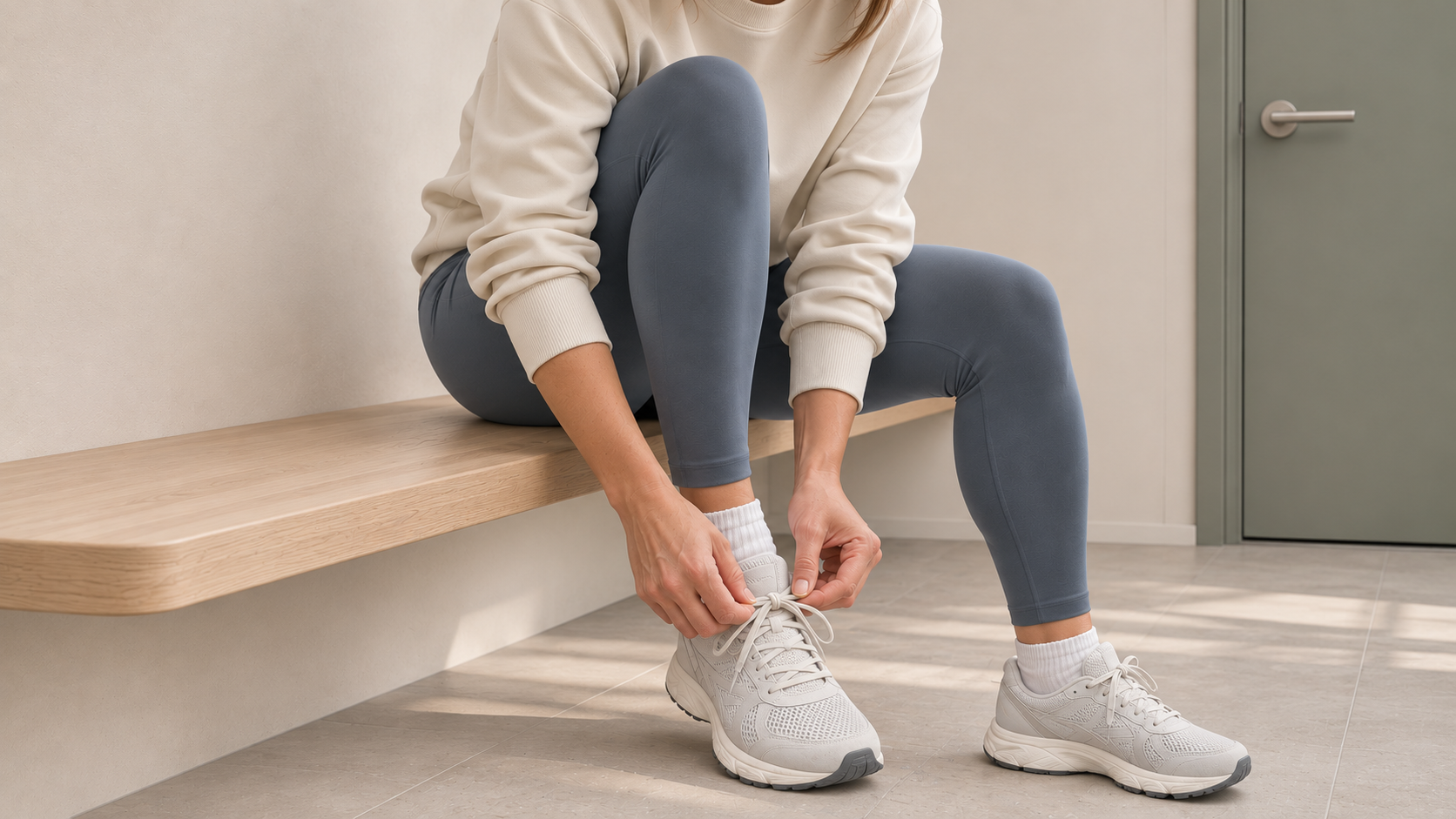
There is no single magic number of steps, and the 10,000 steps target is widely traced to a Japanese pedometer marketing campaign rather than to research. Large studies suggest that the risk of early death tends to fall as daily steps increase and levels off at roughly 6,000 to 10,000 steps, depending on age, so a realistic personal goal may be more useful than a fixed number.
How many steps a day you may need
Step counts have become popular because they are easy to track with phones and fitness trackers. Researchers have used this data to study how daily steps relate to health outcomes. The findings can help set realistic goals, although they come mainly from observational studies.
The sections below explain where the 10,000-step goal came from, what recent research suggests about step counts and how steps fit with general physical activity guidelines. Understanding this background can help you choose a goal that suits you.
Where the 10,000-step goal came from
The goal of 10,000 steps a day is widely used, but it was not originally based on scientific evidence. Researchers have noted that it is often traced back to a marketing campaign for a pedometer in Japan [1]. It became popular because it is a round, memorable number.
This does not mean 10,000 steps is a bad goal. For people who are already active, it can be a useful target. For people who currently walk much less, it may feel out of reach and discouraging. Research on step counts can help set more personalized goals.
| Common belief | What research suggests |
|---|---|
| 10,000 steps is a scientific target | It is often traced to a marketing campaign [1] |
| Benefits only start at 10,000 steps | Benefits appear at lower step counts [1] [2] |
| Fewer steps are not worth it | Even modest increases are linked with better outcomes [2] |
Knowing that benefits may start earlier can make walking feel more achievable. The aim is to move more than you do now, rather than reaching a specific number immediately. Any increase from your current level can be a meaningful step.
What research says about daily steps and health
A meta-analysis of 15 international cohorts with 47,471 adults found that taking more steps per day was associated with a progressively lower risk of death during follow-up [1]. The benefit appeared to level off at around 6,000 to 8,000 steps a day for adults aged 60 and older and around 8,000 to 10,000 steps for younger adults [1].
A later meta-analysis looked at a wider range of outcomes. Compared with 2,000 steps a day, around 7,000 steps a day was associated with lower risks of death, cardiovascular disease, dementia, depressive symptoms and falls [2]. The authors suggested that 7,000 steps may be a realistic target for some people, while 10,000 remains a viable goal for those who are more active [2].
| Finding | Source |
|---|---|
| Lower risk of death with more steps, levelling off at 6,000 to 10,000 depending on age | Paluch and colleagues [1] |
| Around 7,000 steps linked with lower risks of several health outcomes compared with 2,000 | Ding and colleagues [2] |
| About 4,000 steps also linked with better outcomes than 2,000 | Ding and colleagues [2] |
These studies show associations rather than proof of cause and effect, and other factors may also play a role. Still, they consistently suggest that moving more is linked with better health for many people. Setting a goal that fits your current level can make these findings easier to put into practice.
How steps fit with activity guidelines
Health organizations usually express physical activity guidelines in minutes rather than steps. The World Health Organization recommends that adults do at least 150 to 300 minutes of moderate-intensity aerobic activity per week, or an equivalent amount of vigorous activity, along with muscle-strengthening activities on two or more days [3].
Brisk walking is a common example of moderate-intensity activity. This means that regular walks can contribute to these guidelines, alongside other activities. Step counts can be a helpful way to track daily movement, while minutes of brisk walking can show whether you are meeting activity guidelines.
- Brisk walking can count towards weekly activity minutes.
- Step counts include all movement, not only exercise.
- Muscle-strengthening activities are also recommended.
- Some activity is better than none, especially if you are starting from very little.
The [Exercise](https://ultiself.com/habits/exercise) habit can help you add strength and other activities alongside walking. Our guide on [how to start exercising](https://ultiself.com/blog/how-to-start-exercising) explains how to build a balanced routine. Combining walking with strength activities may offer a wider range of benefits than either alone.
How to walk more during a busy day
Finding time for a long walk is not always possible, but many short walks can add up. The strategies below focus on building movement into everyday routines, such as commuting, work and errands. Small changes can make a noticeable difference to daily step counts.
Each strategy connects with a habit you can track in your daily routine. The table shows how each approach links to a related habit, so you can choose the ones that fit your day. Starting with the easiest changes can build momentum for the rest.
| Strategy | What it changes | Habit to practice |
|---|---|---|
| Track your steps | Awareness of daily movement | [Tracking 10,000 steps per day](https://ultiself.com/habits/tracking-10000-steps-per-day) |
| Walk outside regularly | More steps and fresh air | [Walk outside](https://ultiself.com/habits/walk-outside) |
| Take breaks from sitting | Less time sitting still | [Regular breaks](https://ultiself.com/habits/regular-breaks) |
| Walk with your dog | A daily reason to walk | [Walk my dog](https://ultiself.com/habits/walk-my-dog) |
| Go for a hike | Longer walks on weekends | [Go for a hike](https://ultiself.com/habits/go-for-a-hike) |
Know your starting point
Before setting a goal, it can help to know how many steps you take now. Most phones and fitness trackers record steps automatically. Looking at your average over a week can give a clearer picture than a single day, as step counts often vary between workdays and weekends.
Once you know your starting point, you can set a goal to increase gradually. For example, adding 1,000 steps a day, which is roughly 10 minutes of walking for many people, may be more realistic than jumping straight to a large target. The table shows a gradual approach.
| Week | Example daily goal |
|---|---|
| Week 1 | Your current average |
| Week 2 | Current average plus 1,000 steps |
| Week 3 | Current average plus 2,000 steps |
| Week 4 | Current average plus 3,000 steps |
The [Tracking 10,000 steps per day](https://ultiself.com/habits/tracking-10000-steps-per-day) habit helps you keep an eye on daily movement. You can adjust the target to suit your starting point rather than aiming for 10,000 straight away. Seeing your daily total can also be motivating on days when you are close to your goal.
Build walking into your routine
Linking walks to existing routines can make them easier to remember. A walk after lunch, a few stops earlier on public transport or a walk to a local shop instead of driving can add steps without needing extra planning. Over time, these choices can become automatic.
Short walks can be as useful as long ones for building movement into the day. Taking the stairs, walking during phone calls or parking further away all add up. The list gives ideas for different parts of the day.
- Walk part of your commute or get off public transport one stop early.
- Take a short walk after meals.
- Use the stairs instead of the lift when possible.
- Walk to nearby shops or errands.
- Take walking phone calls when you do not need a screen.
The [Walk outside](https://ultiself.com/habits/walk-outside) habit encourages regular time outdoors, and the [Walk my dog](https://ultiself.com/habits/walk-my-dog) habit gives a daily reason to walk for dog owners. Choosing the easiest moments in your day to add a walk can help the habit stick. Over time, these walks may become a part of the day you look forward to.
Break up long periods of sitting
Many people sit for long periods at work or at home. Getting up regularly to walk or stretch can add steps and break up sitting time. Setting a reminder to move every hour or so can help, especially on busy days when time passes quickly.
Some workplaces allow walking meetings or standing desks, which can also reduce sitting time. Even a short walk to refill a water bottle or talk to a colleague in person can add up. The table shows simple ways to move more at work.
| Situation | Possible change |
|---|---|
| Long desk sessions | Stand up and walk for a few minutes every hour |
| One-to-one meetings | Suggest a walking meeting |
| Messaging a colleague nearby | Walk over and talk in person |
| Lunch break | Take a short walk outside |
| Phone calls | Walk while you talk |
The [Regular breaks](https://ultiself.com/habits/regular-breaks) habit reminds you to move during the day, and the [Work standing up for 1 hr](https://ultiself.com/habits/work-standing-up-for-1-hr) habit offers another way to reduce sitting time. Even a few minutes of movement each hour can add up over a working day. Breaking up sitting time may also help you feel more refreshed.
Make walks more enjoyable
Walking is easier to keep up when you enjoy it. Listening to music, a podcast or an audiobook can make walks feel shorter. Walking with a friend or family member can turn a walk into social time. Exploring new routes or parks can add variety.
Walking outdoors also offers time in daylight and fresh air, which many people find refreshing. Weekend hikes or longer walks in nature can be a way to combine exercise with relaxation. The list shows ideas for making walks more enjoyable.
- Listen to a podcast or audiobook.
- Walk with a friend, partner or family member.
- Try a new route or park each week.
- Plan a longer walk or hike at the weekend.
- Notice your surroundings rather than your phone.
The [Go for a hike](https://ultiself.com/habits/go-for-a-hike) and [Listen to a podcast](https://ultiself.com/habits/listen-to-a-podcast) habits can add variety to your walking routine. Choosing comfortable shoes and clothing for the weather can also make walks more pleasant. Varying your walks can help keep them interesting over months rather than weeks.
How to make walking a lasting habit
Walking more for a week or two is often easier than keeping it up for months. Building walking into your identity and routine can help it last. Planning for obstacles, such as bad weather or busy days, can also make it easier to continue.
The sections below cover turning walking into a daily habit, handling obstacles and staying safe. Together, they can help you make walking a regular part of your life. Small, consistent walks tend to be easier to maintain than occasional long ones.
Turn walking into a daily habit
Habits form through repetition in a consistent context. In one study, new daily habits took a median of 66 days to feel automatic, with large differences between people [4]. Walking at the same time each day, such as after breakfast or lunch, can help it become part of your routine.
If-then plans can also help. A meta-analysis of 94 tests found that such plans had a medium to large effect on reaching goals [5]. For walking, a plan might be: if I finish lunch, I go for a 10-minute walk before returning to work.
| Situation | If-then plan |
|---|---|
| After lunch | If I finish eating, I walk for 10 minutes |
| Commute | If I take the bus, I get off one stop early |
| Phone calls | If I get a call, I walk while I talk |
| Evening | If I finish dinner, I take a short walk |
| Weekend | If it is Saturday, I plan a longer walk |
Our guide on [how long it takes to build a habit](https://ultiself.com/blog/how-long-does-it-take-to-build-a-habit) explains how routines become familiar. Tracking your walks in the Ultiself app can help you see progress over time. Seeing your streaks grow can be an encouraging reminder of how far you have come.
Plan for bad weather and busy days
Weather and busy schedules are common reasons to skip walks. Planning alternatives in advance can make it easier to keep moving. For example, walking in a shopping centre, using a treadmill or doing a short indoor walking routine can help on rainy days.
On busy days, shorter walks are better than none. A 5-minute walk between tasks can still add steps and break up sitting time. The table shows examples of backup plans. Having a backup plan ready means you do not need to decide what to do in the moment.
| Obstacle | Backup plan |
|---|---|
| Rain or cold | Walk indoors or wear suitable clothing |
| Very hot weather | Walk early in the morning or in the evening |
| Busy day | Take several 5-minute walks |
| Feeling tired | Take a slower, shorter walk |
| Travelling | Explore the new area on foot |
The [Use a treadmill desk](https://ultiself.com/habits/use-a-treadmill-desk) habit offers an indoor option if you have access to one. Being flexible with your plans can help you keep the habit going. Missing a day is normal, and returning to your routine the next day is what matters most over time.
Walk safely and comfortably
Walking is safe for most people, but a few precautions can make it more comfortable. Supportive shoes, clothing suitable for the weather and staying hydrated can help, especially on longer walks. Walking in well-lit areas and being aware of traffic are also important.
People with health conditions, joint pain or who have been inactive for a long time may want to talk to a doctor before significantly increasing their activity. The list shows situations in which professional advice is a sensible step.
- You have a heart condition, high blood pressure or diabetes.
- You have joint pain, especially in the knees or hips.
- You feel chest pain, dizziness or severe breathlessness when walking.
- You are recovering from an injury or surgery.
- You are pregnant and unsure how much activity is right for you.
If you notice chest pain, dizziness or severe breathlessness while walking, stop and seek medical advice. The habits in this guide can sit alongside professional advice, but they are not a substitute for medical care when a health condition is involved.
Common questions
How many steps a day should I aim for?
Research suggests benefits may begin at lower step counts than 10,000. One large analysis found around 7,000 steps a day was linked with lower risks of several health outcomes compared with 2,000. A gradual increase from your current level is a common approach.
Is 10,000 steps a day necessary?
Not necessarily. The 10,000-step goal is often traced to a marketing campaign, and research suggests benefits can appear at lower counts. It can still be a useful target for people who are already active.
How can I walk more during a busy day?
Walking part of your commute, taking short walks after meals, using the stairs and taking walking breaks or phone calls are common ways to add steps.
Does walking count as exercise?
Brisk walking is a common example of moderate-intensity activity, which can count towards weekly physical activity guidelines alongside other activities.
When should I talk to a doctor before walking more?
It is sensible to talk to a doctor if you have a heart condition, joint pain or other health concerns, or if you notice chest pain, dizziness or severe breathlessness while walking.
Sources
- Paluch AE, Bajpai S, Bassett DR, et al. Daily steps and all-cause mortality: a meta-analysis of 15 international cohorts. Lancet Public Health, 2022.
- Ding D, et al. Daily steps and health outcomes in adults: a systematic review and dose-response meta-analysis. Lancet Public Health, 2025.
- World Health Organization. WHO guidelines on physical activity and sedentary behaviour, 2020.
- Lally P, van Jaarsveld CHM, Potts HWW, Wardle J. How are habits formed: modelling habit formation in the real world. European Journal of Social Psychology, 2010.
- Gollwitzer PM, Sheeran P. Implementation intentions and goal achievement: a meta-analysis of effects and processes. Advances in Experimental Social Psychology, 2006.