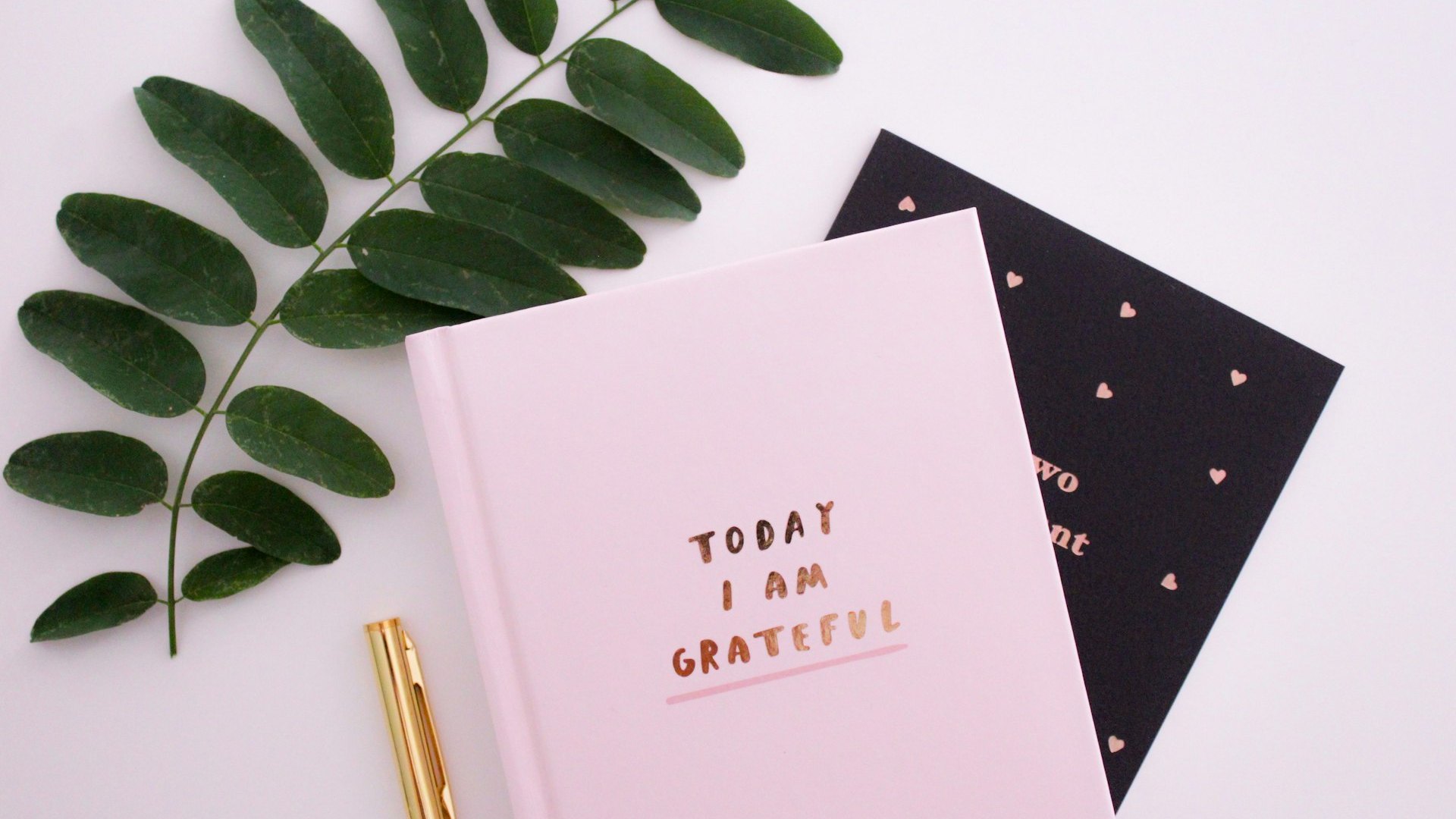
To start journaling, choose a notebook or app, set a small goal such as five minutes a day, pick a regular time and use a simple prompt like "What is on my mind today?" There is no wrong way to journal. Writing honestly and regularly matters far more than writing well, and short entries count.
What is journaling?
Journaling is the practice of regularly writing down your thoughts, feelings, experiences or plans. It can be a few lines about your day, a list of things you are grateful for, a page of free writing or a planner that tracks goals and habits. The format is flexible, and the main idea is to give your thoughts a place outside your head.
People journal for many reasons. Some want to process emotions, others want to remember daily life, set goals or spark creativity. Because there are no rules, journaling can adapt to almost any routine, from a quick note before bed to a longer weekend reflection.
Benefits of journaling
Research on journaling started with psychologist James Pennebaker's studies on expressive writing in the 1980s. In his early experiments, students who wrote about difficult experiences for 15 minutes on four days reported fewer health center visits in the following months than students who wrote about neutral topics [1]. Many later studies have tested similar writing exercises.
The overall effects are real but modest. A large meta-analysis by Joanne Frattaroli found that expressive writing had a small average benefit across many outcomes, with results varying between studies and people [2]. Other studies suggest that writing works best when people explore both their feelings and their understanding of an event, rather than only venting [3]. Journaling is a helpful tool, not a cure-all.
- Helps you notice and name emotions.
- Can make stressful events feel more understandable.
- Gives worries a place outside your head.
- Supports goal setting and tracking progress.
- Creates a record of your life to look back on.
Gratitude writing and to-do lists
Some forms of journaling have their own research. In studies by Robert Emmons and Michael McCullough, people who wrote weekly about things they were grateful for reported feeling better about their lives than those who wrote about hassles [4]. Our guide on [how to keep a gratitude journal](https://ultiself.com/blog/how-to-keep-a-gratitude-journal) covers this practice in detail.
Writing a to-do list before bed may also help with sleep. In one experiment, people who wrote a specific list of upcoming tasks fell asleep faster than people who wrote about tasks they had already completed [5]. This suggests that simply getting tasks onto paper can ease an overactive mind.
Types of journaling
There are many ways to journal, and the best type depends on what you want from it. Some people stick to one style, while others mix several, such as a short gratitude list in the morning and free writing in the evening. Trying a few types for a week each is a good way to find what suits you.
Each type has a different focus and suits a different goal. Choose one that matches what you want from journaling right now, knowing you can always switch later or combine two styles once the habit is in place.
| Type of journaling | What it involves | Good for |
|---|---|---|
| Free writing | Writing whatever comes to mind without editing | Clearing your head and noticing thoughts |
| Expressive writing | Writing about deep feelings around a difficult event | Processing stressful experiences |
| Gratitude journal | Listing things you are grateful for | Noticing good things in daily life |
| Reflective journal | Answering questions about your day or week | Learning from experiences |
| Bullet journal | Short lists, trackers and plans in a notebook | Organizing tasks and habits |
| Prompt journal | Responding to a set question each day | Beginners who are unsure what to write |
You do not need to pick perfectly. If one type feels like a chore after a week, try another. The best journal is the one you actually keep coming back to.
How to start journaling: 7 steps for beginners
Starting a journal is easier when you remove as many decisions as possible. These seven steps cover the practical choices, from what to write in to when to write, so you can focus on the writing itself. Keep the first few weeks light and treat them as an experiment.
Many beginners give up because they aim for long, deep entries every day. Starting small makes the habit far easier to keep and builds the routine before you add more.
1. Choose your format
Decide whether you prefer paper or digital. A notebook can feel more personal and is free from notifications, while an app or document is easy to search and always with you on your phone. Neither is better. Choose the one you are most likely to use without friction.
2. Set a small goal
Start with five minutes or three sentences a day. A small goal feels achievable even on busy or tired days, and it is easy to write more when you feel like it. Consistency builds the habit, while long entries can come later.
3. Pick a regular time
Link journaling to an existing routine, such as after morning coffee or just before bed. A fixed time and place act as a reminder, so you do not have to decide each day. Evening journaling suits reflection, while morning journaling works well for setting intentions.
4. Use a prompt when stuck
A blank page can feel intimidating. Prompts give you a starting point, such as "What went well today?" or "What is worrying me right now?" Keep a short list of prompts at the front of your journal to use whenever you are unsure what to write.
5. Write honestly and freely
Your journal is for you, so there is no need to worry about grammar, spelling or style. Write as you would talk to a trusted friend. Honest entries, even messy ones, are usually the most useful when you read back over them.
6. Keep it private
Knowing that no one else will read your journal makes it easier to be honest. Keep a paper journal somewhere safe or use a password on a digital one. If privacy is a concern, you can also write and then discard the pages.
7. Review from time to time
Every few weeks, read back through your entries. You may notice patterns in your mood, recurring worries or progress you had forgotten. This review often makes journaling feel more rewarding and shows how much has changed.
30 journal prompts for beginners
Prompts are one of the easiest ways to get started. They give your writing a direction and help on days when your mind feels blank. These 30 prompts are grouped into three themes, so you can choose based on your mood or goal for the day.
Pick one prompt per entry and write for at least a few minutes. There is no need to answer every part, and it is fine to drift away from the question. Let the prompt lead wherever it goes, because the unexpected turns are often the most useful.
Prompts for reflection
- What was the best part of my day?
- What challenged me today, and how did I handle it?
- What am I feeling right now, and where do I notice it in my body?
- What did I learn this week?
- What is something I keep thinking about?
- When did I feel most like myself recently?
- What would I like to remember about today?
- What drained my energy this week, and what restored it?
- What is one thing I would do differently today?
- What am I proud of from the past month?
Prompts for gratitude and self-kindness
- What are three things I am grateful for today?
- Who made a positive difference in my week?
- What small moment made me smile recently?
- What is something my body did for me today?
- What would I say to a friend going through what I am going through?
- What is one strength I showed this week?
- What is a place where I feel calm and safe?
- What is something I am looking forward to?
- What is a recent mistake I can forgive myself for?
- What do I appreciate about my life right now?
Prompts for goals and growth
- What matters most to me right now?
- What is one goal I want to work toward this month?
- What is one small step I can take tomorrow?
- What habit would I like to build, and why?
- What is holding me back, and what could help?
- What would my ideal ordinary day look like?
- What skill would I like to learn this year?
- What does success mean to me?
- What would I attempt if I knew I could not fail?
- What do I want more of, and less of, in my life?
How to stick with journaling
Most people stop journaling not because it is unhelpful but because the habit slips during busy periods. Keeping the goal small, writing at the same time each day and keeping your journal visible all help. If you miss a day, simply start again the next day without trying to catch up.
It also helps to accept that some entries will feel boring or repetitive. That is normal. If writing about difficult experiences leaves you feeling worse for a long time, switch to lighter prompts and consider talking to someone you trust. Our guide on [how to stop overthinking](https://ultiself.com/blog/how-to-stop-overthinking) offers other ways to manage looping thoughts.
How to start journaling step by step
Journaling becomes easier when it is part of a routine. Each step in this plan connects to a habit, so you can make writing regular and see how it relates to your mood and stress over time.
Begin with a short daily entry and add other types of journaling once the habit feels natural. A few minutes most days is enough to notice a difference in how clearly you think about your days.
| Step | Why it may help | Habit to practice |
|---|---|---|
| Write a few lines each day | Builds a regular writing habit | [Journaling](https://ultiself.com/habits/journaling) |
| Reflect on your evening | Helps you process the day | [Evening journal reflection](https://ultiself.com/habits/evening-journal-reflection) |
| Start the morning with a short entry | Sets intentions for the day | [Morning journal completion](https://ultiself.com/habits/morning-journal-completion) |
| List things you are grateful for | Linked with feeling better about life [4] | [Gratitude journal](https://ultiself.com/habits/gratitude-journal) |
| Review your week | Shows patterns and progress | [Weekly review and reflection](https://ultiself.com/habits/weekly-review-reflection) |
With Ultiself, you can track your journaling habit alongside your mood, which makes it easier to see how regular writing fits into your week and how it relates to how you feel. Looking back at a month of entries next to your mood record often shows patterns that are easy to miss day to day.
Common questions
How do I start journaling for beginners?
Choose a notebook or app, set a small goal such as five minutes a day, write at a regular time and use simple prompts when you are unsure what to write. Consistency matters more than length.
What should I write in my journal?
You can write about your day, your feelings, things you are grateful for, goals, worries or anything on your mind. Prompts such as "What went well today?" make it easier to start.
What are the benefits of journaling?
Research suggests journaling can help people process emotions and stressful experiences, though the average effects are modest. Many people also use it to set goals, reduce worry and remember daily life.
How long should I journal each day?
Five to fifteen minutes is enough for most people. Short, regular entries tend to be more sustainable than long sessions that are hard to keep up.
Is it better to journal in the morning or at night?
Both work. Morning journaling suits planning and setting intentions, while evening journaling suits reflection. Choose the time you are most likely to stick with.
Sources
- Pennebaker JW, Beall SK. Confronting a traumatic event: toward an understanding of inhibition and disease. Journal of Abnormal Psychology, 1986.
- Frattaroli J. Experimental disclosure and its moderators: a meta-analysis. Psychological Bulletin, 2006.
- Ullrich PM, Lutgendorf SK. Journaling about stressful events: effects of cognitive processing and emotional expression. Annals of Behavioral Medicine, 2002.
- Emmons RA, McCullough ME. Counting blessings versus burdens: an experimental investigation of gratitude and subjective well-being in daily life. Journal of Personality and Social Psychology, 2003.
- Scullin MK, Krueger ML, Ballard HK, Pruett N, Bliwise DL. The effects of bedtime writing on difficulty falling asleep: a polysomnographic study comparing to-do lists and completed activity lists. Journal of Experimental Psychology: General, 2018.