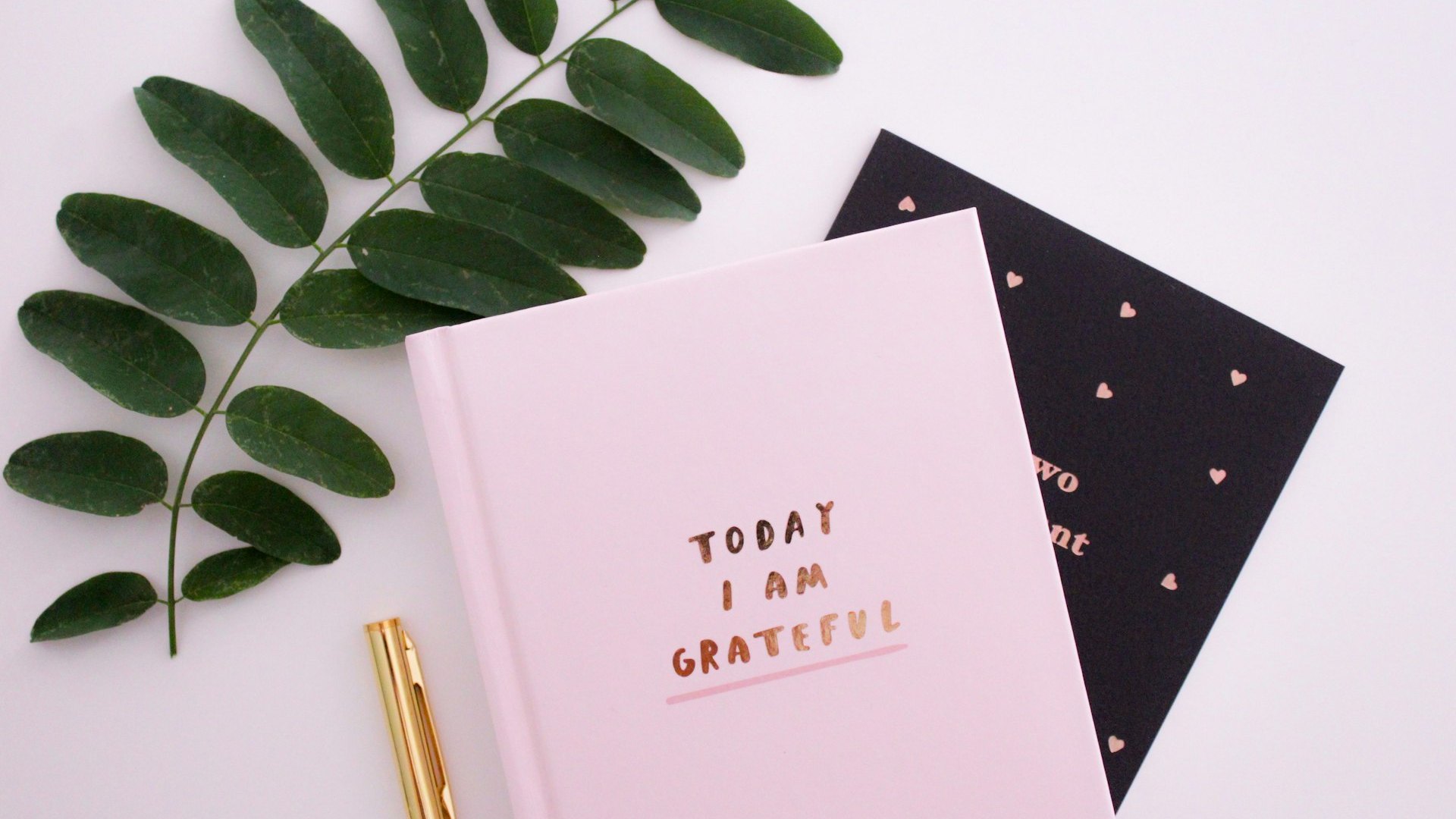
Being happier usually comes from everyday habits rather than big life changes: spending time with people you care about, moving your body, sleeping well, noticing what goes right and doing things that feel meaningful. Research suggests that close relationships are one of the strongest predictors of long-term well-being [1]. These habits do not remove hard times, but they can make good days more frequent.
What does it mean to be happy?
Psychologists often describe happiness as subjective well-being, which has three parts: feeling positive emotions often, feeling negative emotions less often and being satisfied with your life overall. This view is useful because it separates momentary moods from the bigger question of whether your life feels good and worth living.
Happiness also has a quieter side that researchers call eudaimonic well-being, which is about meaning, growth and living in line with your values. Both sides matter. A pleasant evening and a sense of purpose at work are different kinds of happiness, and a good life usually includes some of each rather than constant cheerfulness.
What research says makes people happier
For years, a popular claim held that about 40% of happiness is under our control through daily activities, with the rest shaped by genes and circumstances [2]. Later researchers questioned how those exact numbers were calculated [3]. The broader point still holds: genes and life events matter, but what we do every day also plays a real role.
The strongest finding comes from the Harvard Study of Adult Development, which has followed participants since 1938. Its directors report that the quality of close relationships predicted health and happiness in later life better than wealth, fame or social class [1]. Other well-studied influences include physical activity, time in nature, gratitude, kindness toward others and enough sleep.
Does money make you happier?
Money helps up to a point, especially when it covers basic needs and reduces stress. A large 2023 study, carried out jointly by researchers who had previously disagreed, found that happiness generally kept rising with income, although for the least happy group it leveled off above a certain level [4]. How money is spent also matters.
Spending on experiences, on other people and on buying back time tends to be linked with more happiness than spending on things. In one experiment, people who were given money and asked to spend it on someone else felt happier by the end of the day than those who spent it on themselves [5]. Small amounts were enough to make a difference.
How to be happy: 10 daily habits
The habits below are backed by research and can fit into an ordinary day. None of them works like a switch, and their effects are usually modest, but together they shape how you feel over weeks and months. Think of them as regular practice for your well-being, in the same way exercise is practice for your body.
You do not need to start all ten at once. Choose two or three that appeal to you and that fit your schedule, practice them for a few weeks and then add more. The table summarizes what research has found for each habit, so you can see why it may be worth trying.
| Habit | What research found |
|---|---|
| Invest in close relationships | Relationship quality predicted later-life health and happiness [1] |
| Move most days | Exercisers reported fewer days of poor mental health [6] |
| Spend time in nature | About 2 hours a week outdoors was linked with better well-being [7] |
| Write down good things | Noting three good things daily raised happiness for months [8] |
| Practice gratitude | Weekly gratitude writing was linked with more positive mood [9] |
| Do something kind | Spending on others boosted happiness more than spending on oneself [5] |
| Limit social media | Cutting use to 30 minutes a day reduced loneliness [10] |
| Be present | People were less happy when their minds wandered [11] |
| Protect your sleep | Sleep problems are closely tied to low mood |
| Do something meaningful | Purpose is a core part of well-being |
The effects in these studies were measured on average across groups, so your own experience may differ. The useful question is not which habit is scientifically best, but which one you will actually keep doing. A habit you enjoy and repeat will usually do more for you than a better-researched one you abandon after a week.
Connection, movement and nature
Make time for people who matter to you. A short call, a shared meal or a walk with a friend can lift your mood more than a solitary treat. Regular contact is more important than big occasions, so it helps to plan it into your week, for example with a weekly call or dinner.
Movement and time outdoors support mood as well. In a study of more than a million people in the US, those who exercised reported fewer days of poor mental health than those who did not [6]. A separate study found that spending about two hours a week in nature, in one visit or several, was linked with better health and well-being [7]. A walk in a park can combine both.
Gratitude, kindness and attention
Gratitude practices train attention toward what is going well. In a study by Martin Seligman and colleagues, people who wrote down three good things each day and why they happened reported higher happiness for six months [8]. Our guide on [how to keep a gratitude journal](https://ultiself.com/blog/how-to-keep-a-gratitude-journal) includes prompts that make this easier.
Kindness works in a similar way, shifting focus away from your own worries. Being present also helps. In the study of mind wandering mentioned earlier, people were less happy when their minds drifted from what they were doing [11]. Putting the phone down during meals and conversations is a simple way to be more present.
Savoring helps too: pausing to notice a good moment, such as the first sip of coffee or the end of a hard task, makes positive experiences last a little longer. It takes only a few seconds, yet it turns ordinary moments into small sources of pleasure that are easy to miss on a busy day.
- Write three good things before bed.
- Do one small kind act each day.
- Eat at least one meal without screens.
- Plan one activity you look forward to each week.
How to be happy with yourself
Being happy with yourself is less about liking everything you see and more about how you treat yourself when things go wrong. Harsh self-criticism tends to make setbacks feel worse, while a kinder inner voice makes it easier to learn and try again. Self-compassion, which means treating yourself as you would a good friend, has been linked with greater well-being in many studies.
Comparison is another common obstacle. Measuring your life against the best moments others share online can leave you feeling behind, even when your life is going well. Our guides on [how to practice self-compassion](https://ultiself.com/blog/how-to-practice-self-compassion) and [how to stop comparing yourself to others](https://ultiself.com/blog/how-to-stop-comparing-yourself-to-others) offer practical steps for both.
How to be happy alone
Time alone can be restful and satisfying when it is a choice. Research on solitude suggests that short periods alone, without devices, can help people feel calmer, especially when they choose that time for themselves. The key is to fill it with activities you enjoy, such as reading, cooking, a hobby or a walk, rather than passive scrolling.
Being happy alone does not mean doing without people altogether. Even if you live alone or prefer your own company, a few regular connections, such as a weekly call or a class, support well-being. If you would like more social contact, our guide on [how to make friends as an adult](https://ultiself.com/blog/how-to-make-friends-as-an-adult) covers practical ways to meet people.
- Plan enjoyable solo activities rather than waiting for free time.
- Keep a hobby that absorbs your attention.
- Get outside at least once a day.
- Keep at least one regular social contact each week.
Sleep and meaning
Sleep and mood affect each other. Short or irregular sleep makes it harder to manage emotions, and low mood can disturb sleep in return. Keeping regular sleep and wake times is one of the most practical things you can do for your well-being, and our guide on [how to fix your sleep schedule](https://ultiself.com/blog/how-to-fix-your-sleep-schedule) explains how to start.
Meaning matters as much as pleasure. Activities that connect to your values, such as learning, helping others, creating something or caring for people, tend to feel rewarding even when they are not easy. If you are unsure what gives your life meaning, our guide on [how to find your core values](https://ultiself.com/blog/how-to-find-your-core-values) offers simple exercises.
When low mood lasts
Everyone has sad days, and happiness habits are not a cure for depression or other mental health conditions. If low mood, loss of interest in things you usually enjoy, changes in sleep or appetite, or feelings of hopelessness last for more than two weeks, talk to a doctor or mental health professional. Effective treatments are available.
If you ever have thoughts of harming yourself, seek help straight away. In the US, you can call or text 988 to reach the 988 Suicide and Crisis Lifeline, which is free and available at any time. In other countries, contact local emergency services or a crisis line. Reaching out to someone you trust can also be an important first step.
How to be happier step by step
Happiness habits work best when they become part of your routine rather than something you try once on a bad day. Each step in this plan connects to a habit, so you can practice it regularly and notice which ones make the biggest difference for you over a few weeks.
Start small and stay consistent. Two habits practiced every day for a month usually do more than ten habits attempted for a week, and the effects tend to build quietly over time.
| Step | Why it may help | Habit to practice |
|---|---|---|
| Write down three good things each evening | Linked with higher happiness for months [8] | [Gratitude journal](https://ultiself.com/habits/gratitude-journal) |
| Contact someone you care about | Relationships predict long-term well-being [1] | [Call a friend](https://ultiself.com/habits/call-a-friend) |
| Move for at least 20 minutes | Exercise was linked with fewer poor mental health days [6] | [Exercise](https://ultiself.com/habits/exercise) |
| Spend time outdoors | Time in nature was linked with better well-being [7] | [Walk outside](https://ultiself.com/habits/walk-outside) |
| Notice small pleasures | Trains attention toward positive moments | [Micro-pleasure journaling](https://ultiself.com/habits/micro-pleasure-journaling) |
| Keep regular sleep times | Sleep affects mood and energy | [Sleep hygiene routine](https://ultiself.com/habits/sleep-hygiene-routine) |
Ultiself lets you build these habits into a daily routine and look back at how consistently you practiced them, which can help you connect what you do with how you feel. Over a month, those notes often reveal simple patterns, such as better days after a walk or a call with a friend.
Common questions
How can I be happier every day?
Spend time with people you care about, move your body, get outside, sleep well and notice what goes right, for example by writing down three good things each evening. Small habits repeated daily tend to matter more than big changes.
What makes people happiest according to research?
Close relationships are one of the strongest predictors of long-term happiness. Exercise, time in nature, gratitude, kindness and enough sleep are also linked with greater well-being.
Can you train yourself to be happier?
Research suggests daily habits such as gratitude writing, exercise and social connection can improve well-being over time. Effects are usually modest, and genes and life circumstances also play a role.
How can I be happy alone?
Choose enjoyable activities for your time alone, such as a hobby, reading or a walk, limit passive scrolling and keep at least one regular social contact each week.
When should I get help for low mood?
If low mood, loss of interest or hopelessness lasts more than two weeks, talk to a doctor or mental health professional. If you have thoughts of self-harm, seek help immediately; in the US you can call or text 988.
Sources
- Waldinger R, Schulz M. The Good Life: Lessons from the World's Longest Scientific Study of Happiness. Simon and Schuster, 2023.
- Lyubomirsky S, Sheldon KM, Schkade D. Pursuing happiness: the architecture of sustainable change. Review of General Psychology, 2005.
- Brown NJL, Rohrer JM. Easy as (happiness) pie? A critical evaluation of a popular model of the determinants of well-being. Journal of Happiness Studies, 2020.
- Killingsworth MA, Kahneman D, Mellers B. Income and emotional well-being: a conflict resolved. Proceedings of the National Academy of Sciences, 2023.
- Dunn EW, Aknin LB, Norton MI. Spending money on others promotes happiness. Science, 2008.
- Chekroud SR, Gueorguieva R, Zheutlin AB, et al. Association between physical exercise and mental health in 1.2 million individuals in the USA. The Lancet Psychiatry, 2018.
- White MP, Alcock I, Grellier J, et al. Spending at least 120 minutes a week in nature is associated with good health and wellbeing. Scientific Reports, 2019.
- Seligman MEP, Steen TA, Park N, Peterson C. Positive psychology progress: empirical validation of interventions. American Psychologist, 2005.
- Emmons RA, McCullough ME. Counting blessings versus burdens. Journal of Personality and Social Psychology, 2003.
- Hunt MG, Marx R, Lipson C, Young J. No more FOMO: limiting social media decreases loneliness and depression. Journal of Social and Clinical Psychology, 2018.
- Killingsworth MA, Gilbert DT. A wandering mind is an unhappy mind. Science, 2010.