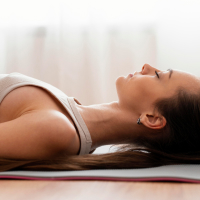

Description
Gravitational relaxation is a body-based relaxation technique that involves tensing and releasing muscles to create a sense of deep heaviness and calm. This practice mimics the soothing effect of a weighted blanket, helping the body transition into a restful state. By focusing on the sensation of heaviness and relaxation, this method reduces anxiety, relieves physical tension, and enhances sleep quality.

Time Commitment
5–10 minutes before bed

Suggested Frequency
Daily or at least 5 times per week for the best results.
Time of Day
Evening (right before sleep)

How to Do It
- Lie Down Comfortably: Rest on your back in bed or on a soft surface.
- Tense Your Muscles: Tighten all the muscles in your body for about 5 seconds.
- Release the Tension Quickly: Let go and allow your body to feel heavy.
- Focus on the Sensation: Imagine your body sinking into the surface beneath you.
- Visualize Warmth: Picture a soothing warmth spreading from your core to your limbs.
- Breathe Deeply: Take slow, deep breaths, further enhancing the relaxation effect.
- Stay in This Relaxed State: Remain still for 5–10 minutes before drifting into sleep.

Required Equipment
- Quiet, Comfortable Space: A bed or soft surface where you can lie down.
- Optional: Dim Lighting or Aromatherapy: Helps create a calming environment.
- Optional: Soft Music or White Noise: Can enhance relaxation.

Benefits
- Reduces Physical Tension: Releases muscle tightness, easing stress-related discomfort.
- Promotes Deep Relaxation: Mimics the grounding effect of a weighted blanket, enhancing a sense of calm.
- Improves Sleep Quality: Lowers nighttime restlessness and encourages deeper, more restorative sleep.
- Helps Reduce Nightmares: Provides a sense of security, decreasing nighttime anxiety.
- Enhances Body Awareness: Helps the mind connect with the body for better relaxation.
Why it works
Gravitational relaxation activates the parasympathetic nervous system, which signals the body to relax. The technique reduces muscle tension and stress hormones, promoting a natural sleep state. The feeling of heaviness also mimics deep pressure stimulation, which has been shown to enhance relaxation, reduce anxiety, and improve sleep quality.

Possible Side Effects
- Mild Restlessness at First: If you’re not used to deep relaxation, it may take a few sessions to fully experience the effects.
- Drowsiness: This technique is designed to induce sleep, so avoid doing it if you need to stay alert.
- Overstimulation from Deep Breathing: Some people may feel lightheaded if they breathe too rapidly—maintain slow, controlled breaths.

Tips
- Combine with Deep Breathing: Helps enhance relaxation and slows down the heart rate.
- Use a Weighted Blanket: Can amplify the grounding effect and further improve sleep quality.
- Practice in a Dark Room: Minimizing light exposure helps reinforce melatonin production.
- Be Consistent: The more often you practice, the more effective it becomes over time.
Supporting Studies and Articles
- The Science Behind Deep Pressure Stimulation
Chen, H. L., Yang, H., & Lin, J. J. (2016). "Effects of Deep Pressure on Reducing Anxiety and Promoting Sleep." Journal of Sleep Research, 25(3), 341-356.
This study explores how deep pressure techniques, like weighted blankets and muscle relaxation, help regulate sleep patterns.
This study explores how deep pressure techniques, like weighted blankets and muscle relaxation, help regulate sleep patterns.
- Progressive Muscle Relaxation and Sleep
Morin, C. M., & Espie, C. A. (2003). "The Role of Relaxation Therapy in the Treatment of Insomnia." Behavioral Sleep Medicine, 1(3), 115-130.
Research highlights the effectiveness of muscle relaxation techniques in improving sleep quality.
Research highlights the effectiveness of muscle relaxation techniques in improving sleep quality.
- The Benefits of Body Awareness in Sleep Optimization
Huberman, A. (2021). "Using the Body’s Nervous System to Enhance Sleep." Neuroscience Podcast.
Discusses how focusing on bodily sensations can improve relaxation and sleep efficiency.
Discusses how focusing on bodily sensations can improve relaxation and sleep efficiency.
Upgrade Yourself with our Breakthrough App
Get UltiselfRate Habit
Gravitational Relaxation