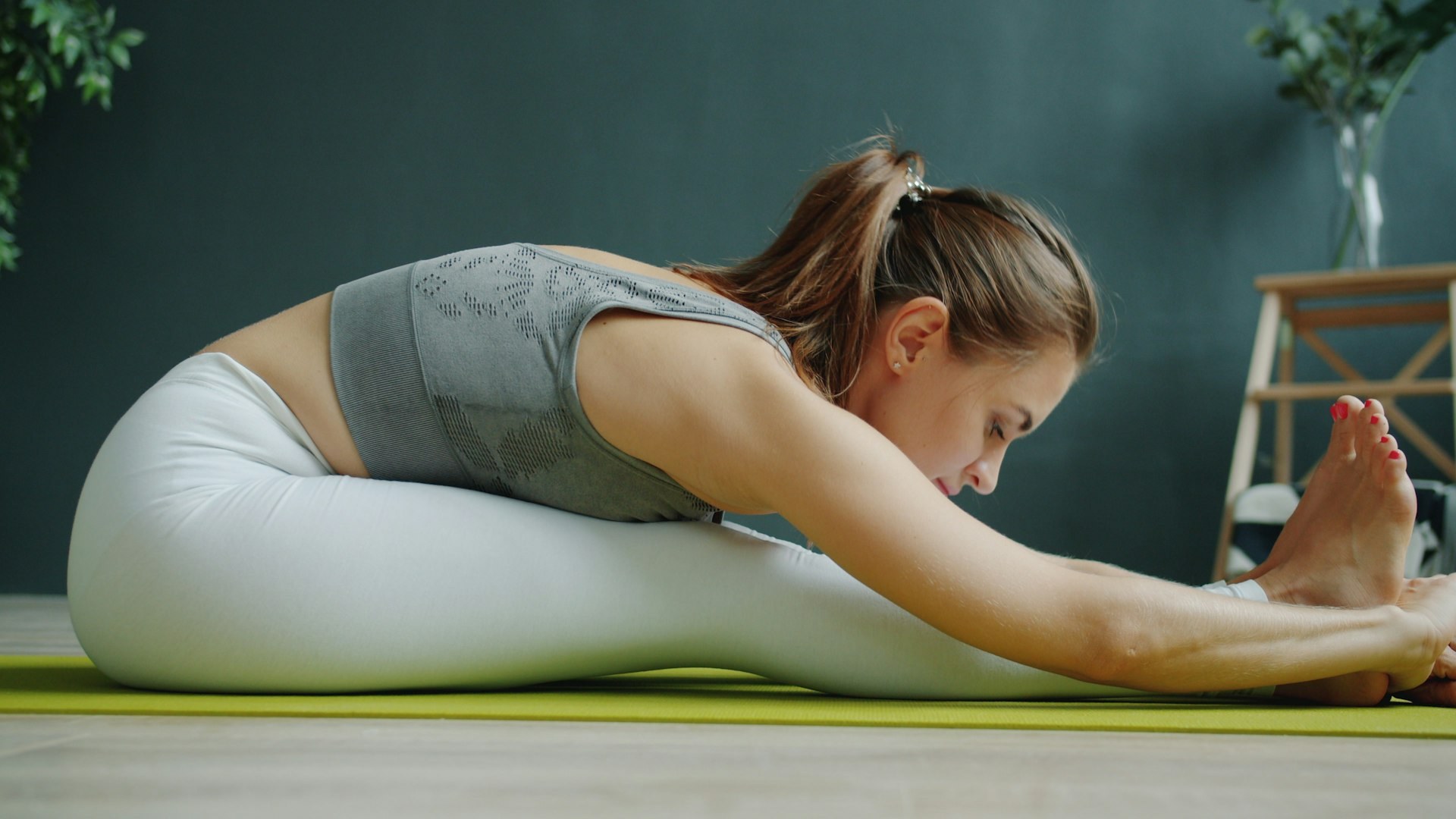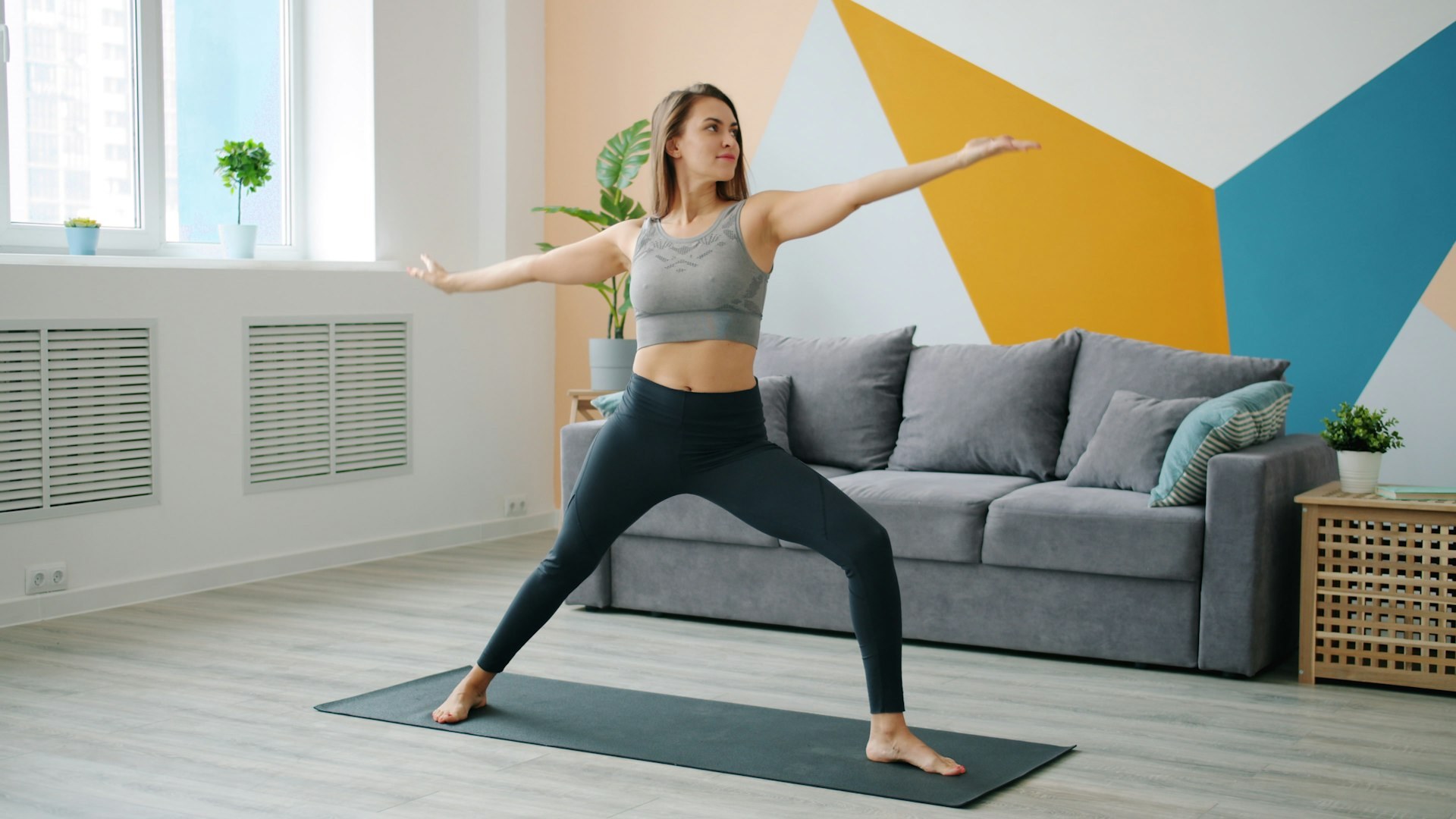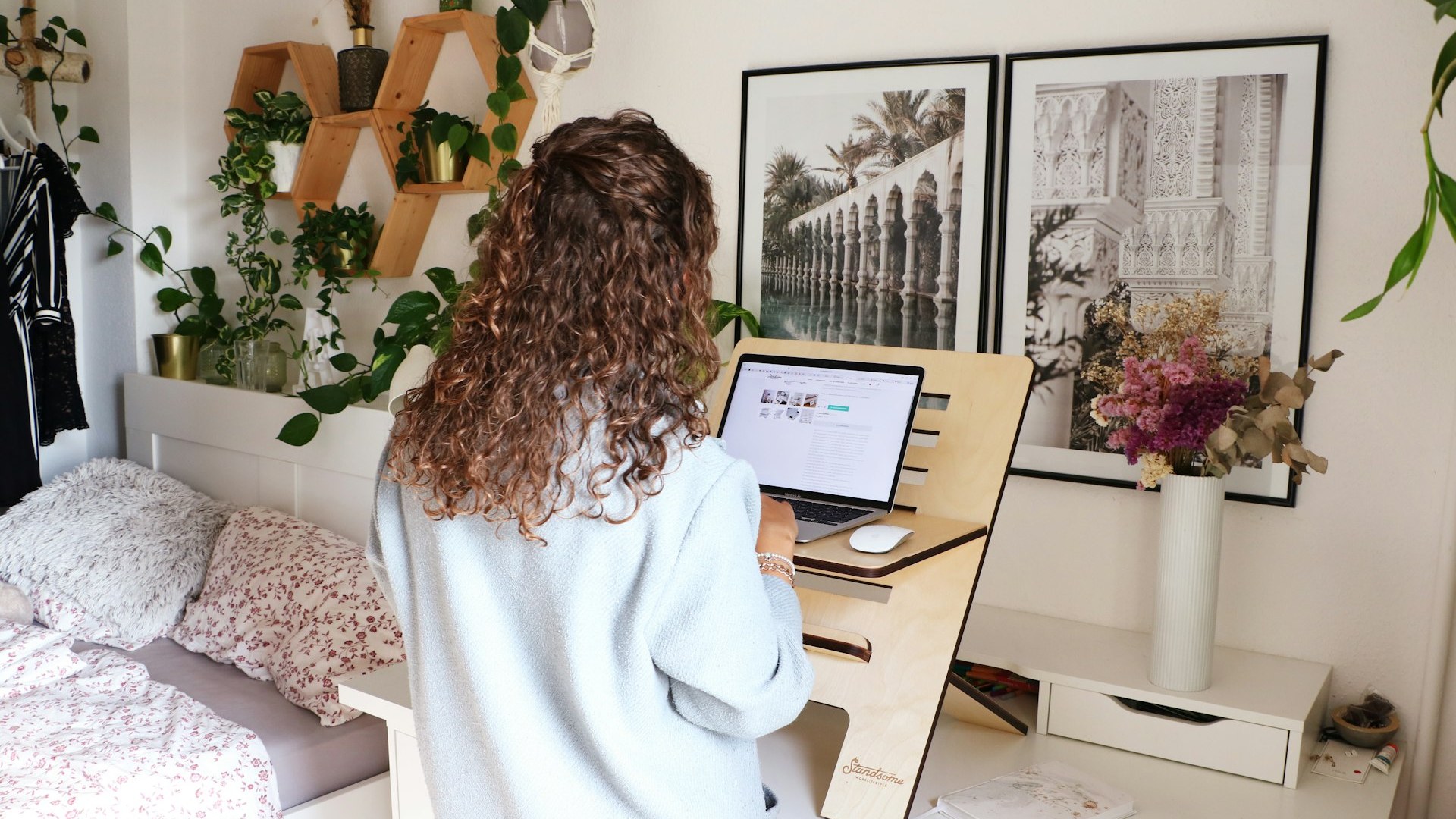
To improve posture, change positions often, set up your desk so the screen is at eye level and your feet rest flat, and strengthen and stretch the muscles of your back, shoulders, hips and core. Research suggests there is no single perfect posture. The most comfortable posture is the next one, so moving regularly matters more than holding one ideal position all day.
What is good posture?
Good posture is a position that lets you sit, stand and move comfortably without unnecessary strain. When standing, a balanced posture usually means your ears are roughly above your shoulders, your shoulders are relaxed and your weight is spread evenly over both feet. When sitting, it means your back is supported, your feet rest on the floor and your shoulders are not hunched.
Bodies differ, so posture varies naturally from person to person. Physiotherapists increasingly describe good posture as one that feels comfortable and that you can change easily, rather than a strict, upright position held for hours. Being able to move between positions without pain or stiffness is a better sign of healthy posture than how straight you look. Strength, flexibility and regular movement all support that ability.
- Head balanced over the shoulders rather than pushed forward.
- Shoulders relaxed, not raised or rounded forward.
- Back supported when sitting.
- Weight spread evenly when standing.
- Frequent changes of position during the day.
Why posture feels worse at the end of the day
Many people notice they slump more as the day goes on. This is usually a sign of muscle fatigue and long periods without movement rather than a structural problem. After hours at a desk or on a phone, the body naturally sinks into positions that take less effort.
Rather than fighting this with constant correction, plan regular breaks and a short movement routine later in the day. A five-minute walk or a few stretches often resets posture more effectively than trying to hold yourself upright through willpower.
Does bad posture cause back pain?
Many people believe slouching causes back pain, but research does not support a strong link. A review of systematic reviews by Caleb Swain and colleagues found no consistent evidence that spinal posture causes low back pain [1]. Physiotherapy researchers have argued that common advice to "sit up straight" is not well supported by evidence and may make some people more anxious about normal movement [2].
That does not mean posture never matters. Staying in any one position for long periods, upright or slouched, can lead to stiffness and discomfort. The more useful message is that movement and variety help most. Changing position regularly, taking breaks and staying active are more likely to reduce discomfort than forcing yourself into a rigid posture. If you have ongoing or severe back pain, see a doctor or physiotherapist, who can assess the cause and suggest exercises suited to you.
How to improve posture when sitting
Most people spend many hours sitting, so a good setup makes a real difference to comfort. Adjust your chair so your feet rest flat on the floor and your knees are roughly level with your hips. Sit back in the chair so your lower back is supported, and keep your screen at about eye level and an arm's length away. A small cushion or rolled towel behind the lower back can help if your chair lacks support.
The most important habit is to change position and get up regularly. Standing, stretching or walking for a few minutes every 30 to 60 minutes breaks up long periods of sitting. A review of workplace interventions found that sit-stand desks reduced sitting time at work by roughly one to two hours a day in the studies included [3]. Our guide on [how many steps a day](https://ultiself.com/blog/how-many-steps-a-day) has easy ways to add movement to sitting days.
Posture when using your phone
Looking down at a phone for long periods places the head forward and the neck bent. Holding the phone closer to eye level, supporting your arms on a table or cushion and taking breaks to look up and move your neck can make phone use more comfortable. Setting a reminder to put the phone down every 20 to 30 minutes also helps.
Laptops raise similar issues because the screen sits low. If you use a laptop for many hours, a stand with a separate keyboard and mouse lets you raise the screen to eye level while keeping your arms in a comfortable position.
How to improve posture when standing
When standing for long periods, spread your weight evenly over both feet, keep your knees slightly soft rather than locked and let your arms hang naturally. Shifting your weight, walking a few steps or resting one foot on a low step from time to time helps prevent stiffness and tired legs.
Comfortable, supportive shoes make standing easier, and a cushioned mat can help if you stand in one spot for long periods. If you carry a bag, alternate shoulders or use a backpack with both straps to spread the load. For people who stand at work, short breaks to sit or stretch are as useful as breaks to stand are for people who sit, since the body does best with variety.
| Check | When sitting | When standing |
|---|---|---|
| Head | Screen at eye level, head balanced over shoulders | Ears roughly above shoulders, chin level |
| Shoulders | Relaxed, elbows close to the body | Relaxed, not pulled back or rounded |
| Back | Supported by the chair | Natural curves, not forced straight |
| Hips and legs | Knees about level with hips, feet flat | Knees soft, weight even on both feet |
| Movement | Stand or stretch every 30 to 60 minutes | Shift weight, walk or sit briefly |
Use these checks as reminders rather than rules, especially when you first set up a new workspace. A few moments of attention several times a day, combined with regular movement, usually does more than trying to hold perfect posture constantly.
6 exercises for better posture
Exercises that strengthen and stretch the back, shoulders, hips and core can make it easier to sit and stand comfortably for longer. Do these two to three times a week, or a few each day as movement breaks, and combine them with other exercise for the best results. Move slowly, breathe steadily and stop if anything causes pain.
These exercises take about ten minutes in total. They also work well as a short routine between long periods of desk work, and you can split them up, doing one or two whenever you take a break.
1. Chin tucks
Sit or stand tall and gently draw your chin straight back, as if making a double chin, without tilting your head down. Hold for a few seconds and repeat 8 to 10 times. This helps counter the forward head position common at screens. It is subtle, so it can be done at your desk without anyone noticing.
2. Shoulder blade squeezes
Sit or stand with arms relaxed. Gently squeeze your shoulder blades together and slightly down, hold for 5 seconds and release. Repeat 10 times to strengthen the upper back. Keep your neck relaxed and avoid shrugging your shoulders toward your ears, which turns the exercise into tension rather than strength.
3. Doorway chest stretch
Place your forearm on a doorframe at shoulder height and gently turn away until you feel a stretch across the chest. Hold for about 30 seconds on each side. This opens the front of the shoulders, which often tighten after long hours of typing or driving.
4. Cat-cow
On hands and knees, slowly round your back toward the ceiling, then let it gently arch as you lift your head. Move with your breath for 8 to 10 repetitions to mobilize the spine. It is a gentle way to loosen up after sitting or first thing in the morning.
5. Glute bridge
Lie on your back with knees bent and feet flat. Press through your heels to lift your hips, pause at the top and lower slowly. Repeat 10 to 12 times to strengthen the hips and lower back. Squeeze your glutes at the top rather than arching your lower back.
6. Plank
Hold a plank on your forearms and knees or toes, keeping your body in a straight line. Start with 15 to 30 seconds and build up gradually to strengthen the core. Keep breathing throughout, and stop if your lower back starts to sag.
Do posture correctors work?
Posture correctors are braces or straps that pull the shoulders back. They can act as a reminder to change position, and some people find them comfortable for short periods. However, there is little high-quality research showing that they improve posture in the long term or reduce pain, and wearing them for many hours may make muscles rely on the brace rather than working on their own.
If you want to try one, use it for short periods as a reminder rather than as a fix, and combine it with regular movement and strengthening exercises. Apps and wearable sensors that remind you to move or adjust your position can serve a similar purpose without restricting how you move. A simple timer on your phone or computer works just as well for many people. Our guide on [how to improve flexibility](https://ultiself.com/blog/how-to-improve-flexibility) offers stretches that complement posture exercises.
- Use correctors only for short periods, if at all.
- Treat them as reminders, not solutions.
- Focus on movement and strengthening for lasting change.
- See a physiotherapist for persistent pain or stiffness.
How to improve posture step by step
Better posture comes from small habits repeated during the day. Each step in this plan connects to a habit, so you can build movement and strength into your routine and track your progress.
Start with regular breaks and a quick posture check, then add exercises two or three times a week. Linking the posture check to something you already do, such as sending an email or finishing a call, makes it easier to remember.
| Step | Why it may help | Habit to practice |
|---|---|---|
| Check your posture several times a day | Builds awareness of tension | [Work on posture](https://ultiself.com/habits/work-on-posture) |
| Take regular movement breaks | Breaks up long periods in one position | [Regular breaks](https://ultiself.com/habits/regular-breaks) |
| Stand for part of the workday | Reduces total sitting time [3] | [Work standing up for 1 hour](https://ultiself.com/habits/work-standing-up-for-1-hr) |
| Stretch daily | Eases stiffness in chest and hips | [Stretching](https://ultiself.com/habits/stretching) |
| Strengthen your back and core | Makes comfortable positions easier to hold | [Pilates](https://ultiself.com/habits/pilates) |
With Ultiself, you can track these posture habits alongside other daily routines, which makes it easier to remember to move and see how your comfort changes over time. Many people notice less stiffness within a few weeks of regular breaks and exercises.
Common questions
How can I improve my posture?
Change positions often, set up your desk so the screen is at eye level and your back is supported, take regular movement breaks and strengthen and stretch your back, shoulders, hips and core.
Does bad posture cause back pain?
Research does not show a strong link between posture and back pain. Staying in any one position for too long can cause stiffness, so regular movement is more important than a perfect posture.
How should I sit at a desk?
Sit with feet flat, knees about level with hips, lower back supported and the screen at eye level. Get up and move every 30 to 60 minutes.
Do posture correctors work?
There is little evidence that they improve posture long term. They can serve as short reminders, but movement and strengthening exercises are more effective.
What exercises help posture?
Chin tucks, shoulder blade squeezes, doorway chest stretches, cat-cow, glute bridges and planks help strengthen and mobilize the muscles that support posture.
Sources
- Swain CTV, Pan F, Owen PJ, Schmidt H, Belavy DL. No consensus on causality of spine postures or physical exposure and low back pain: a systematic review of systematic reviews. Journal of Biomechanics, 2020.
- Slater D, Korakakis V, O'Sullivan P, Nolan D, O'Sullivan K. "Sit up straight": time to re-evaluate. Journal of Orthopaedic and Sports Physical Therapy, 2019.
- Shrestha N, Kukkonen-Harjula KT, Verbeek JH, et al. Workplace interventions for reducing sitting at work. Cochrane Database of Systematic Reviews, 2018.