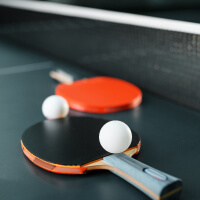

Description
Ping-Pong, also known as table tennis, is a popular recreational and competitive sport in which a small ball is hit back and forth across a table. It requires agility, coordination and quick reflexes and provides both physical and mental stimulation.

Time Commitment

Suggested Frequency
Time of Day
Anytime

How to Do It
To play ping pong, you need a ping pong table, paddles, and ping pong balls. Standing on opposite sides of the table, you take turns hitting the ball over the net, trying to outplay your opponent by using different techniques, spins, and strategies. The goal is to score points by landing the ball in your opponent's half of the table without successfully returning it.

Required Equipment
A ping pong table, paddles, and ping pong balls are the basic equipment needed to play ping pong. These items can be found in sporting goods stores, recreational facilities, or purchased online.

Benefits
- Improves hand-eye coordination and reflexes
- Improves agility, balance and motor skills
- Provides a cardiovascular workout and burns calories
- Promotes mental alertness and focus
- Stimulates strategic thinking and decision making
- Provides social interaction and fun with friends or opponents
- Can be played at different skill levels to accommodate players of different ages and abilities
Why it works
Playing table tennis involves multiple muscle groups, requires quick reactions, and requires mental focus. The constant back-and-forth nature of the game keeps players physically active, while the strategic aspects enhance cognitive skills.

Possible Side Effects
Playing table tennis is generally considered to be safe and low impact. However, as with any physical activity, there is a small risk of minor injury, such as sprains or strains, if proper technique and caution are not used. Be aware of your body's limits and take breaks when needed.

Tips
- Warm up before playing to prepare your muscles and prevent injury.
- Practice different shots, spins, and footwork techniques to improve your game.
- Play with opponents of different skill levels to challenge yourself and learn from others.
- Focus on control and placement rather than just hitting the ball hard.
- Incorporate drills and structured practice sessions to improve specific skills.
- Stay hydrated and take breaks to rest and recover during extended play sessions.
Supporting Studies and Articles
- The Physical and Mental Benefits of Table Tennis https://www.freshairfitness.co.uk/blog/the-physical-and-mental-benefits-of-table-tennis
- Effects of table tennis practice on balance and physical fitness in the elderly https://www.scielo.br/j/jpe/a/fc4hz3NRSSKHGDMRqM5ddhp/?lang=en
- The Neurocognitive Benefits of Table Tennis https://www.mdpi.com/2673-8392/2/3/107
Upgrade Yourself with our Breakthrough App
Get UltiselfMore Habits



Rate Habit
Playing Ping-pong